Rise and Ruin
2nd Year, 2023, Julie Kress
Through careful observation and in-depth analysis of a video recorded session of Here the Slay, the examination of chance, teamwork, and rivalry can influence the flow of play. The video was of three classmates of mine and myself, playing an intensely quick, strategically competitive game. The insights of the game-play informed the ideas that went into designing a responsive table. The individual seats will move according to that respective player’s actions while physically manifesting the game’s shifting power dynamics. The design encourages storytelling, honesty, and technological advancement into the new interactive experience, an experience that would make the game more investing.
Here to Slay is a well-known fast-paced, strategic card game blending role-playing antics, party dynamics, and tactical decision-making; all of these pieces combine into a compact, character-rich format. Players build up their hand of heroes cards from different classes, challenge cards, and boost cards for the players to use those abilities to slay monsters, sabotage other opponents, and navigate a field of risk, opportunity, and camaraderie. The game’s design is to encourage both rivalry and cooperation between players, creating a playfully fierce tension with balancing resource management, probability, and timing to be the first to pursue victory over your fellow opponents. The objective is to be the first to have all six hero cards, or three monster cards. If one sees another opponent pulling ahead, they can sabotage that player to get themselves head. With the vibrant artwork and clear game-play mechanics, Here to Slay demonstrates the narrative, character roles, and competitive interaction and how to work together to create an engaging, replayable tabletop experience to bring more players in.
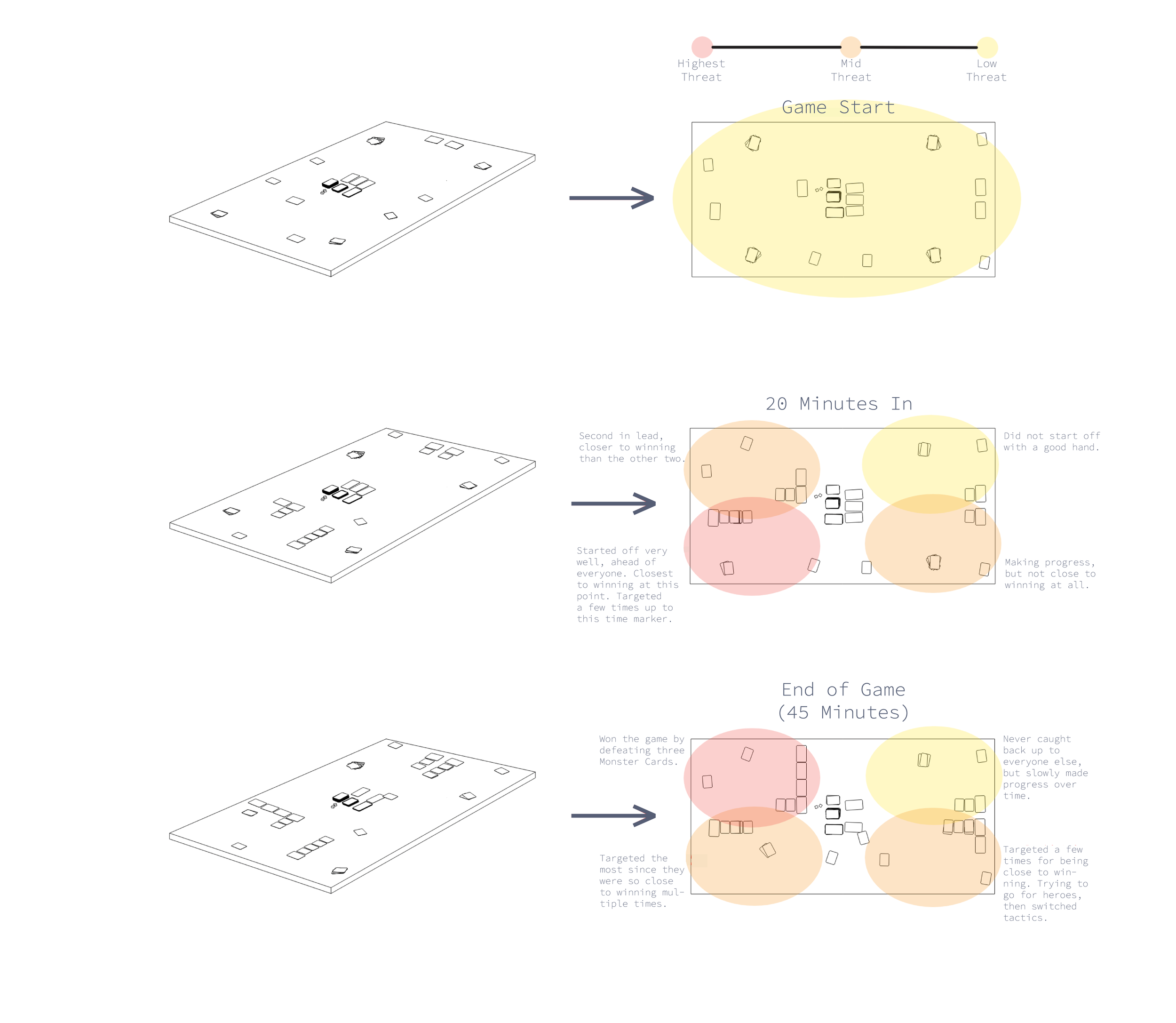
Before the armature is introduced. The analysis of a game played for 45 minutes and how each player performed at the beginning, middle, and end of the game.
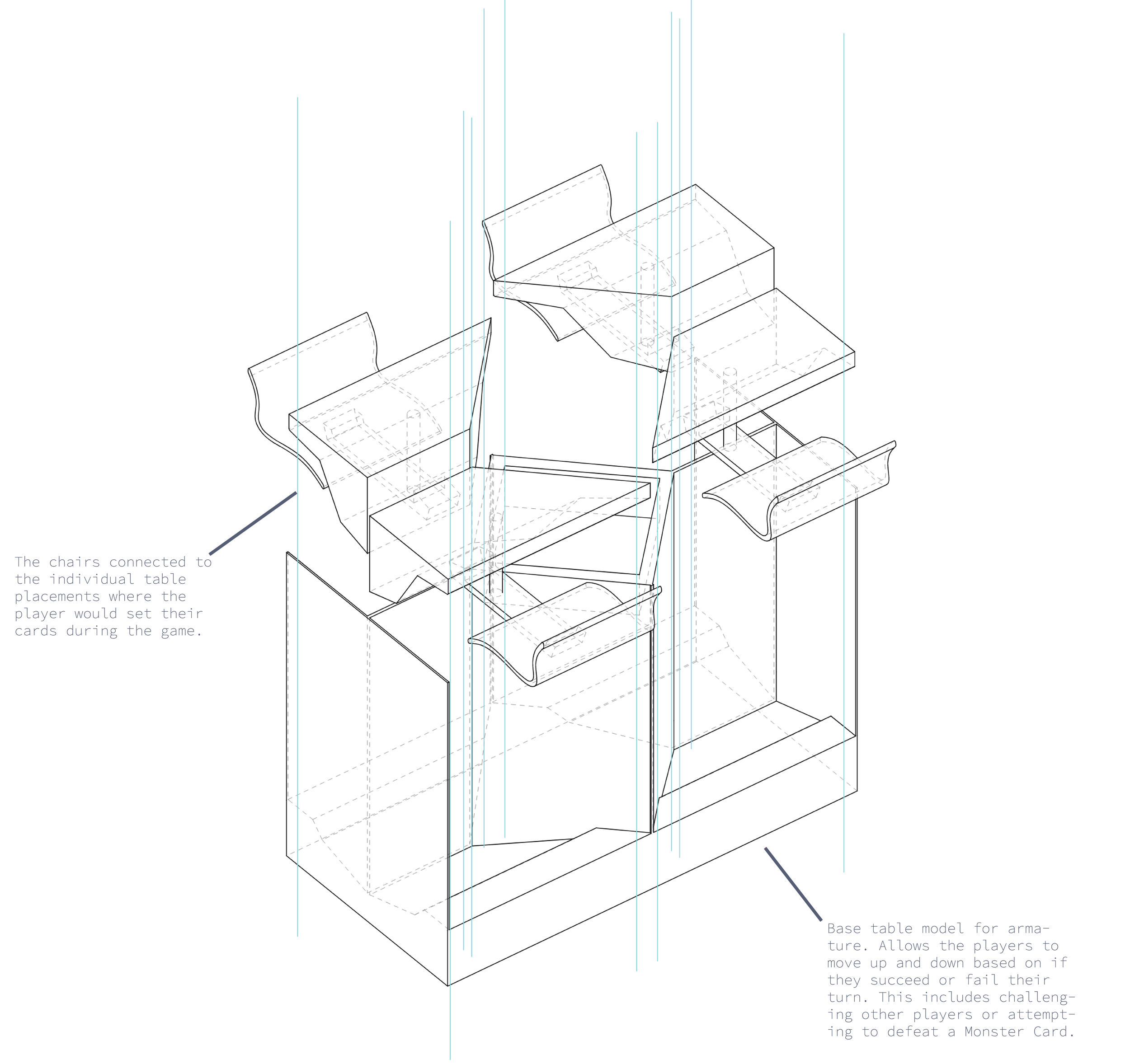
This armature is based on honesty and technological advancements. For honesty, if you fail, everyone would trust you to be honest when you fail an action to move your individual place down, and up if you succeed. For technological advancements, there could be a sensor that detects when you fail and automatically adjusts your individual seat and table, or others can move your seat up and down depending on whether you succeed or fail, depending on the play at hand.
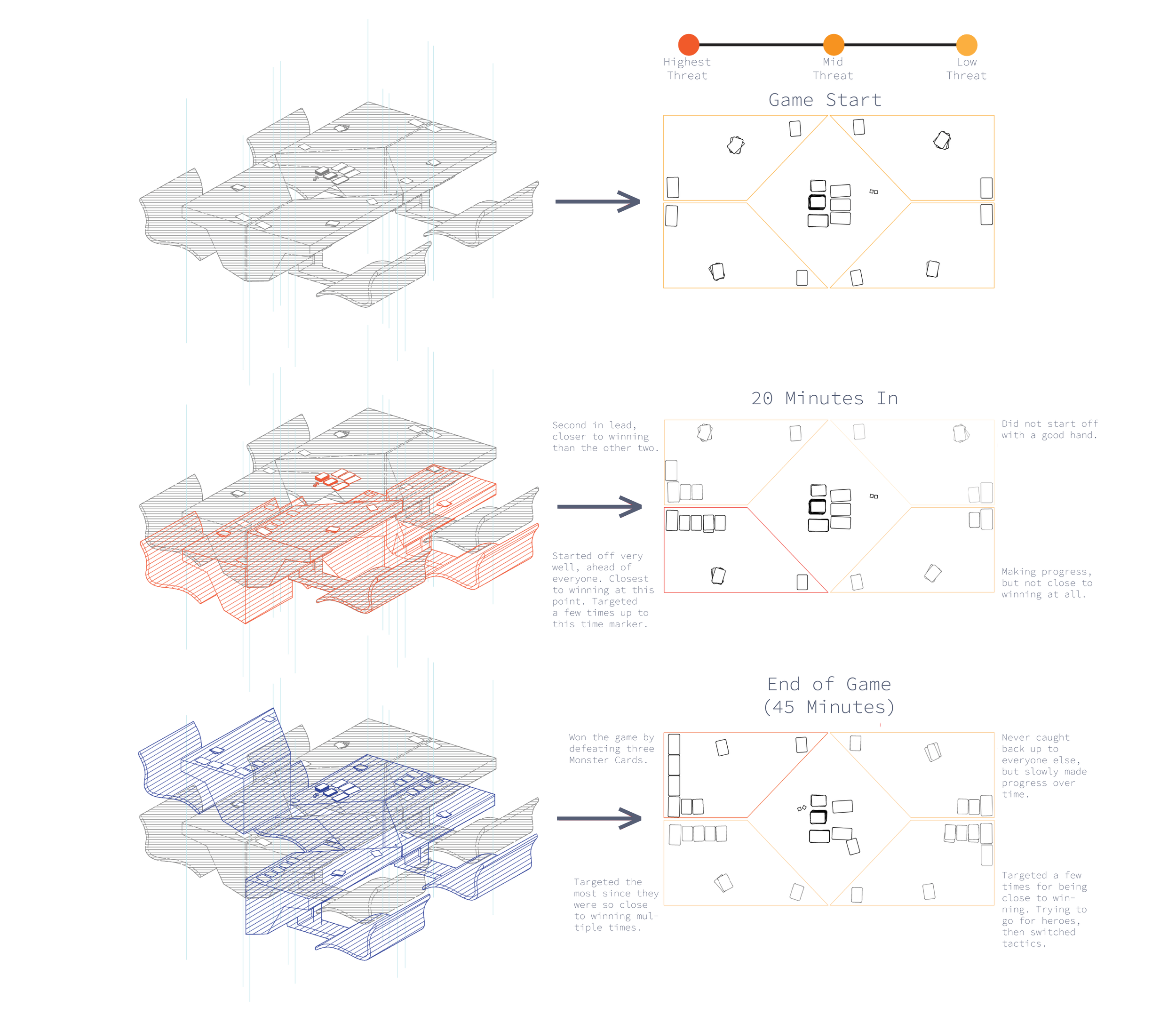
After the armature is introduced. The analysis of a game played for 45 minutes and how each player performed at the beginning, middle, and end of the game. This shows visibly who is succeeding and who is failing their turns.